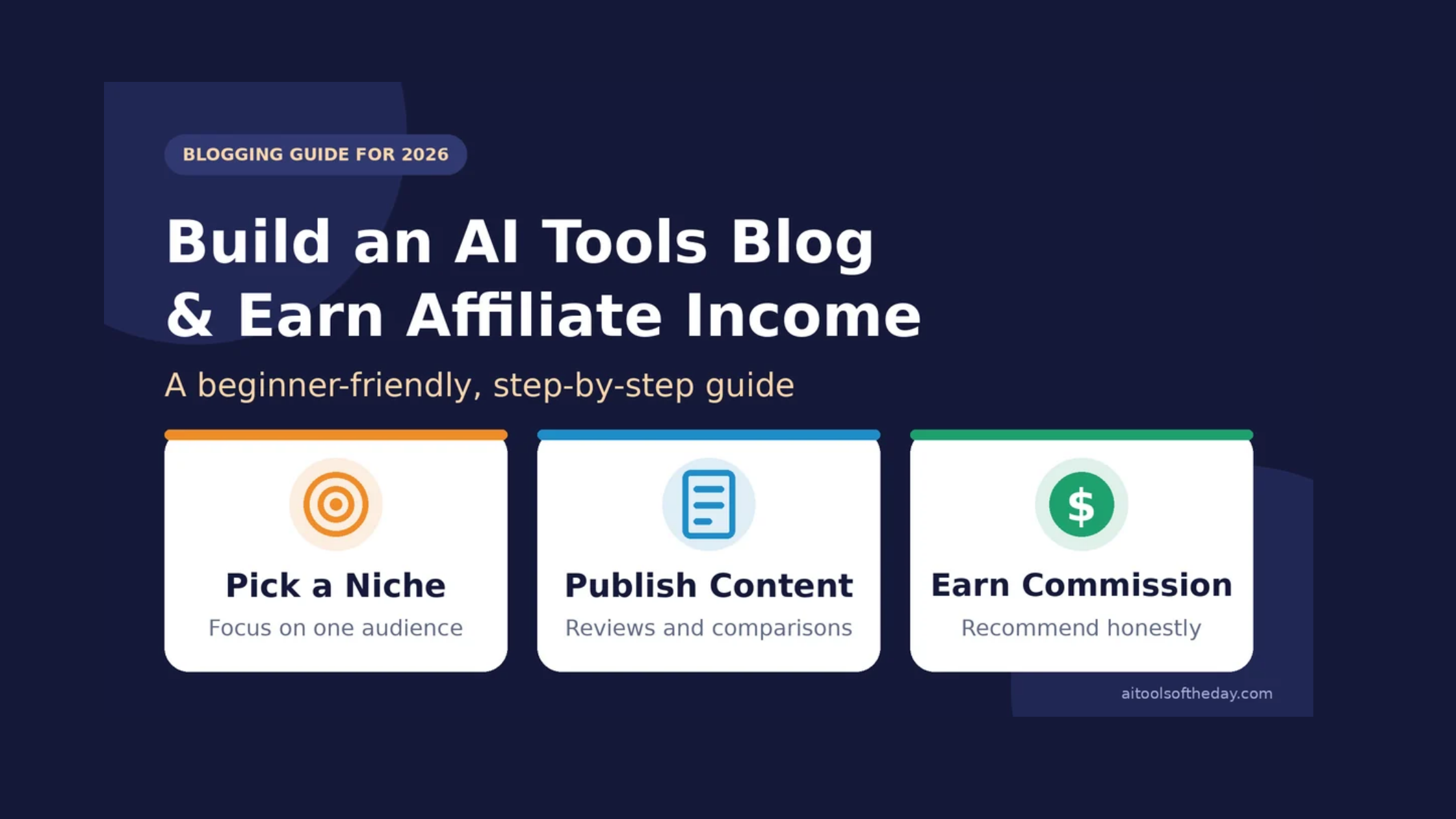
Every week, new AI tools launch, and millions of people search for answers like "What is the best AI writing tool?" or "Is this app worth paying for?" Someone has to answer those questions. If you enjoy testing tools and explaining them clearly, an AI tools blog can become a real source of income through affiliate marketing.
This guide walks you through the whole process: choosing a niche, setting up your site, creating content people actually search for, joining affiliate programs, and staying honest and compliant along the way. We also include a simple 30-day launch plan you can follow.
First, a Reality Check
Affiliate blogging is not a get-rich-quick scheme. Most new blogs earn little or nothing in the first few months, because search engines need time to trust a new website. Income depends on your content quality, your consistency and how well you match readers with tools that truly help them.
The good news is that the AI space is growing fast, readers actively look for buying advice, and many AI companies run affiliate programs. If you treat it as a long-term project and not a shortcut, it can pay off.
What Is Affiliate Income?
Affiliate marketing means you recommend a product using a special tracking link. If a reader clicks your link and then buys or subscribes, the company pays you a commission. The reader pays the same price, and you are rewarded for sending a customer.
For an AI tools blog, this fits naturally. When you write "Best AI Video Editors for Beginners" and link to the tools you reviewed, readers get useful guidance and you may earn a commission if they sign up.
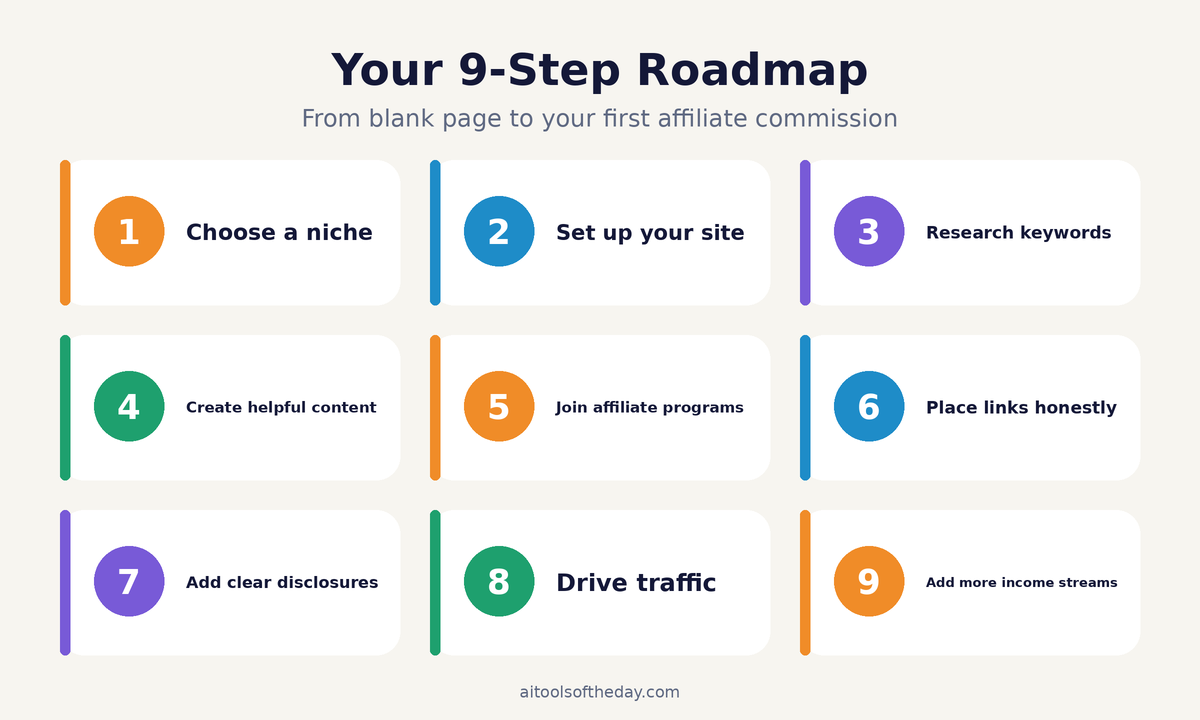
Step 1: Choose a Clear Niche
"AI tools" is a huge topic, and big websites already cover it. A new blog stands a better chance by focusing on a narrower audience. Examples include:
- AI tools for students and teachers
- AI tools for small businesses and freelancers
- AI tools for video creators and YouTubers
- AI tools for coders and developers
- AI tools for marketers and SEO
- AI tools for a specific profession, such as real estate agents or doctors
Pick the area where you have some interest or experience. Your passion will show in your writing, and a focused blog is easier to become known for.
Step 2: Set Up Your Website
You do not need anything fancy to begin. Here is what you need:
- A domain name: short, easy to remember and related to AI or tools.
- Reliable hosting: your site should load fast and rarely go down.
- A website platform: WordPress is a popular choice because of its flexibility and plugins, but you can also use other website builders or a custom build.
- A clean, fast theme: readers should find content quickly, especially on mobile.
- Essential pages: About, Contact, Privacy Policy, Terms and an Affiliate Disclosure page.
If you want a custom directory-style site with tool pages, categories and a prompt library, as many modern AI blogs have, plan the structure early so your content stays organized as you grow.
Step 3: Learn What Readers Search For
The best blog posts answer real questions. Use free keyword and trend tools, your search engine's suggestions and community discussions to find topics. Pay attention to the words people use, such as "best," "free," "vs," "alternative" and "review."
Focus on long-tail keywords, which are longer, more specific phrases such as "best free AI voice generator for YouTube." They have less competition and clearer buying intent than short phrases like "AI tools."
Step 4: Create Content That Earns Trust and Clicks
Not all blog posts are equal when it comes to affiliate income. These formats usually perform best:
- Comparison posts: "Tool A vs Tool B: Which Is Better?" Readers are close to making a decision.
- Best-of lists: "Best AI Image Generators for Beginners." Easy to scan and highly searched.
- Honest reviews: a detailed look at one tool with pros, cons, pricing and who it suits.
- Alternatives posts: "Best Alternatives to [Popular Tool]." People searching these are ready to switch.
- How-to guides: "How to Make a Video with AI in 10 Minutes." These attract beginners and naturally recommend tools.
- Prompt collections: free prompts attract repeat visitors and build your email list.
Whatever format you choose, test the tool yourself where you can. Original screenshots, real examples and honest opinions make your content stand out from copied or generic articles.
Step 5: Find Affiliate Programs
Many AI and software companies offer affiliate or partner programs. You can usually find them in a few ways:
- Look for an "Affiliate," "Partners" or "Referral" link in the footer of a tool's website.
- Search for the tool's name plus "affiliate program."
- Check affiliate networks and partner platforms that list many software programs in one place.
- Contact the company directly and ask if they have a creator or partner program.
When comparing programs, look at the commission type (one-time or recurring), the cookie duration (how long a click is tracked), payout rules and any restrictions. Terms vary a lot and change over time, so always read the current terms on the official page before you promote a tool.
Step 6: Place Affiliate Links the Right Way
Your goal is to help readers first and earn second. Good placement looks like this:
- A clear "Try it" or "Visit website" button in each tool review.
- A comparison table with links next to each tool.
- Natural mentions inside helpful, relevant paragraphs.
- A short recommendation section at the end of a post.
Avoid stuffing links everywhere or recommending a tool only because it pays well. Readers can tell, and trust is your most valuable asset.
Step 7: Be Honest and Follow the Rules
This step is not optional. In many countries, advertising rules require you to clearly tell readers when you earn money from a link.
- Add a short disclosure near the top of any post that contains affiliate links, such as: "This post contains affiliate links. If you buy through them, we may earn a commission at no extra cost to you."
- Publish a full Affiliate Disclosure page and link to it in your footer.
- Follow the guidelines of your local advertising authority, for example the FTC in the United States or the advertising standards bodies in other countries.
- Follow each affiliate program's own terms, including any rules about how you may use their name, logo and claims.
- Never make false promises such as guaranteed income or guaranteed results.
Being open about your links protects you legally and makes readers more likely to trust your advice.
Step 8: Get Traffic to Your Blog
Traffic usually comes from a mix of sources:
- Search engines (SEO): write helpful titles, use clear headings, add internal links between related posts and make your site fast on mobile.
- Social media and video: short videos showing a tool in action can bring many visitors. Platforms like YouTube, Instagram and LinkedIn work well for this topic.
- Email newsletter: collect emails from day one. A weekly "new AI tools" email brings readers back without depending on search engines.
- Communities: answer questions in relevant forums and groups. Be helpful, follow each group's rules and avoid spamming links.
Step 9: Add More Ways to Earn
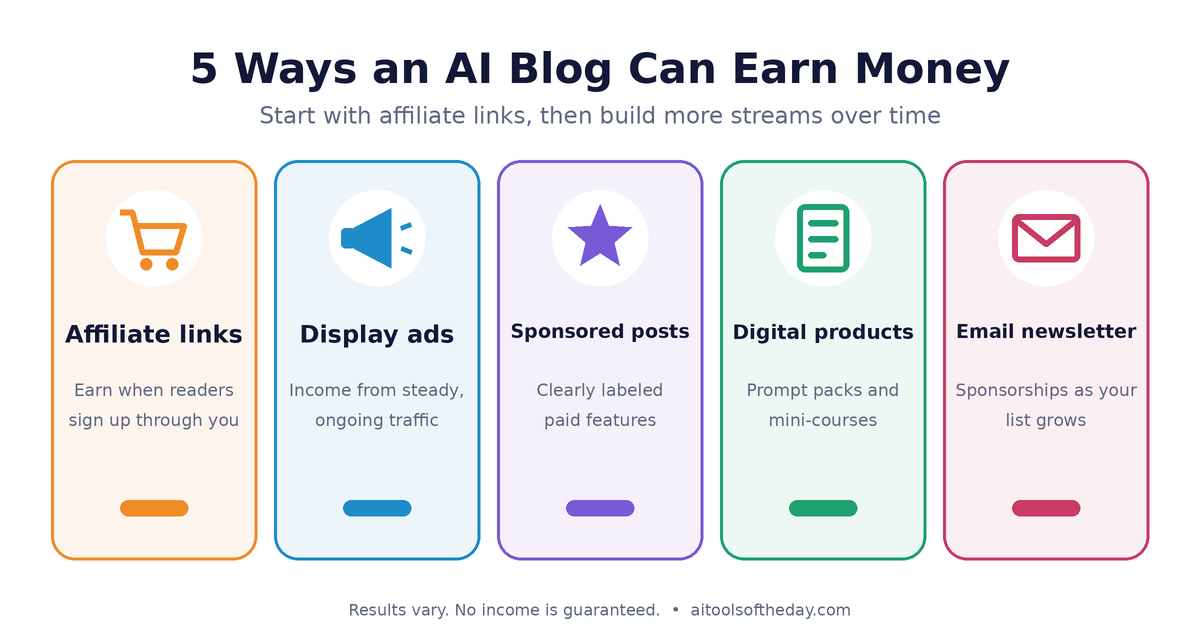
Affiliate commissions are a great start, but strong blogs usually build several income streams over time:
- Display advertising once you have steady traffic
- Sponsored posts and featured listings from tool creators, clearly labeled as sponsored
- Digital products such as prompt packs, templates or mini-courses
- Newsletter sponsorships as your email list grows
- Consulting or services for businesses that want help choosing AI tools
Your 30-Day Launch Plan
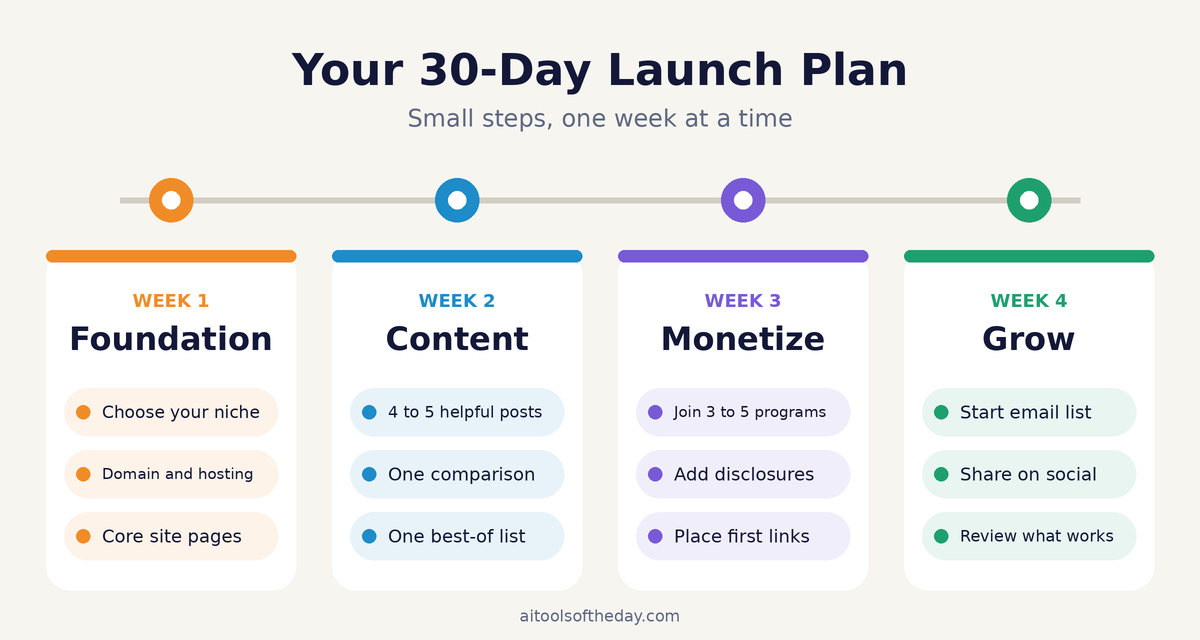
|
Week |
Focus |
What to do |
|---|---|---|
|
Week 1 |
Foundation |
Choose your niche, pick a domain, set up hosting and website, create the essential pages |
|
Week 2 |
Content base |
Publish 4 to 5 helpful posts, including one comparison and one best-of list |
|
Week 3 |
Monetization |
Join 3 to 5 relevant affiliate programs, add disclosures and place your first links |
|
Week 4 |
Growth |
Start an email list, share posts on social media, add internal links and review what is getting visits |
After the first month, keep publishing on a steady schedule, update older posts, and double down on the topics that attract readers.
Common Mistakes to Avoid
- Copying content from other websites. It hurts your rankings and can create legal problems. Always write original content.
- Promoting too many tools. Focus on tools you have actually checked and would recommend to a friend.
- Ignoring disclosure. Hidden affiliate links can damage trust and break advertising rules.
- Giving up too soon. Blogs often take months to gain traction, so consistency matters.
- Chasing only high commissions. A great fit for the reader beats a high payout every time.
- Publishing raw AI-generated text. Use AI as a helper, then add your own testing, opinions and editing so your content is original and genuinely useful.
Frequently Asked Questions
How much money can I make from an AI tools blog?
There is no guaranteed amount. Income depends on your traffic, content quality, niche and the programs you join. Many blogs earn very little at first, so treat early months as an investment in building trust and traffic.
Do I need to know how to code?
No. Website platforms and themes make it possible to build a blog without coding. You only need to learn the basics of publishing content and managing your site.
Can I use AI tools to write my blog posts?
Yes, as an assistant for brainstorming, outlining and editing. But your readers and search engines value originality and real experience, so always add your own testing, insights and fact-checking before publishing.
How long does it take to see results?
It often takes several months for a new site to start getting steady search traffic. Social media, email and communities can bring some visitors sooner.
Are affiliate programs free to join?
Most are free to join, but each has its own approval process and rules. Read the terms carefully, and never pay anyone who promises guaranteed approval or guaranteed income.
Do I have to disclose affiliate links?
In most places, yes. Clear disclosure is expected and often legally required. Check the rules in your country and follow each program's terms.
Final Thoughts
Building an AI tools blog is a long-term project, but it is within reach for anyone willing to learn, test tools and write honestly. Choose a focused niche, publish helpful content consistently, recommend only what you believe in, and be transparent about how you earn. Do that well, and affiliate income can follow.
Ready to start? Browse our AI tools directory to find tools worth writing about, and use our AI prompt library for ideas to speed up your content process.